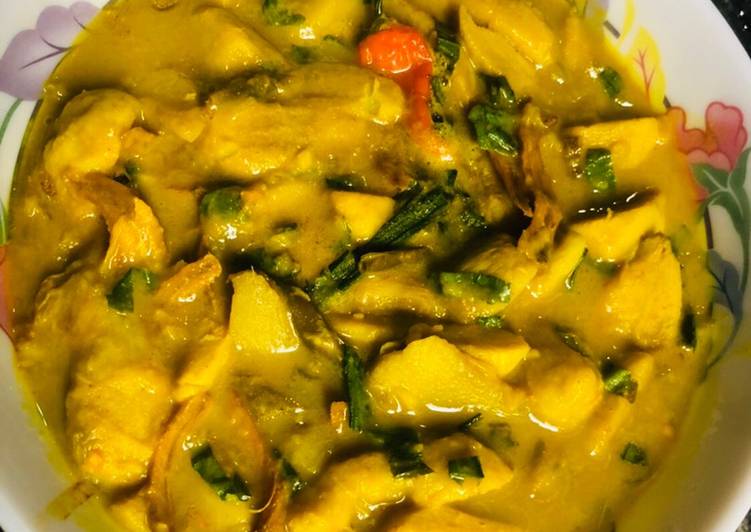
Hey everyone, it’s Louise, welcome to our recipe page. Today, I will show you a way to make a special dish, shutki diye taro (dried fish with a root vegetable). It is one of my favorites. This time, I am going to make it a little bit unique. This is gonna smell and look delicious.
Shutki diye taro (dried fish with a root vegetable) is one of the most popular of current trending meals on earth. It is simple, it’s quick, it tastes yummy. It’s appreciated by millions every day. They’re nice and they look fantastic. Shutki diye taro (dried fish with a root vegetable) is something which I’ve loved my whole life.
Large taro roots can be fibrous, dry, and mealy when cooked but have a nutty sweetness. Roasted taro will have a light, dry, chewy texture, and sweet flavor. Stir-fry or fry thinly sliced taro and serve with a sauce.
To get started with this recipe, we have to prepare a few components. You can cook shutki diye taro (dried fish with a root vegetable) using 10 ingredients and 7 steps. Here is how you can achieve it.
The ingredients needed to make Shutki diye taro (dried fish with a root vegetable):
- Prepare 50 grams shutki or dried fish (any variety of your choice)
- Prepare 8-10 mukhi (colocasia/taro), diced
- Prepare 1 big Onion
- Make ready 1/2 teaspoon Garlic
- Prepare 1 tbspn Cilantro/coriander leaves-
- Prepare 1 tbspn Mustard oil
- Make ready 1/2 Green chillies
- Get 1 Habanero (naga morich)
- Prepare 1/2 teaspoon Turmeric powder
- Take As per taste Salt as required
Colocasia esculenta is a tropical plant grown primarily for its edible corms, a root vegetable most commonly known as taro (/ˈtɑːroʊ, ˈtæroʊ/), or kalo in Hawaiian. Taro is sometimes referred to as "taro root," too, but while we're getting technical, the part of the plant we eat that is grown underground (the leaves and leaf-stems are edible, too) is not the roots, but rather the corms and cormels. Taro root, or satoimo (里芋)in Japanese, are a different matter though, because it has a texture that divides people sharply into like and dislike: sliminess. Taro root is not as aggressively slimy as okra innards, but it definitely is rather slippery. (It's the base ingredient in the Hawaiian speciality poi.) Taro root (Colocasia esculenta) is the thick, tuber stalk of the taro plant.
Instructions to make Shutki diye taro (dried fish with a root vegetable):
- Method: - Wash the dried fish well and chop out the head portion. Drain the water properly.
- Heat oil in a pan and add sliced onion, garlic paste, turmeric powder and green chilies (chopped/slit). Fry them and add salt to taste.
- When the oil seperates, add the dried fish. Cook for a while and cover the pan.
- Now add the chopped taro and stir in properly. Keep the lid on but keep checking frequently to avoid the scorching.
- Add 2 cups of water and let it come to a boil. Turn down the heat to slow cook.
- When the fish and vegetables are cooked, stir in one slit naga morich and finely chopped cilantro/coriander leaves.
- Turn off the heat. Put the lid back and allow some standing time. Serve with steamed rice.
It is an important part of global cuisines and diets for thousands of years. Mushroom powder is nothing but dried mushrooms pulverized into a powdered form. Any type of dietary mushroom can be used to make this powder. This dry land taro root typically has a dark purple skin and white roots. Additionally, it contains a moist flesh inside.
So that is going to wrap this up for this exceptional food shutki diye taro (dried fish with a root vegetable) recipe. Thank you very much for reading. I’m confident you will make this at home. There’s gonna be more interesting food in home recipes coming up. Don’t forget to save this page on your browser, and share it to your loved ones, colleague and friends. Thanks again for reading. Go on get cooking!